
Surgical specialties
Neurosurgery Diploma
Register interest
An evidence-led diploma in neurosurgery: when to operate, when to wait and when not to, across head injury, stroke and aneurysms, brain and spinal tumours and hydrocephalus, anchored on National Institute for Health and Care Excellence (NICE) and European guidance, with US differences explained.
Twenty-five weekly sessions across five modules take you from neurotrauma and neurocritical care, through cerebrovascular surgery and neuro-oncology, to cerebrospinal fluid (CSF) disorders, functional and paediatric neurosurgery, spinal emergencies and infection, taught live by practising specialists you can question.
- Course director
- To be announced
- Format
- 25 live weekly sessions on Zoom, in 5 modules
- Fee
- £1,200 (scholarships available)
- Dates
- Confirmed when enrolment opens
Who it is for
Senior trainees, fellows and early-career consultants in neurosurgery, and surgeons, neurologists and critical care doctors who manage neurosurgical patients, worldwide.
The programme
25 one-hour sessions in 5 modules, each with its learning objectives. This is the draft programme: the course director reviews and refines it before enrolment opens, so session titles may change.
Module 1 · Sessions 1 to 5Neurotrauma and neurocritical care
1. Head injury: assessment, imaging and transfer
- Apply NICE NG232 criteria to decide who needs a CT head scan and how urgently
- Manage head injury in patients taking anticoagulant or antiplatelet drugs
- Identify the CT findings that need discussion with a neurosurgical centre
- Organise a safe transfer of a head-injured patient with a structured handover
2. Severe traumatic brain injury: intracranial pressure and decompressive craniectomy
- Set intracranial and cerebral perfusion pressure targets for a patient with severe traumatic brain injury
- Escalate treatment of raised intracranial pressure through a tiered algorithm
- Counsel families on decompressive craniectomy using RESCUEicp outcomes
- Decide when tranexamic acid is indicated after head injury using CRASH-3 evidence
3. Extradural and acute subdural haematoma: when and how to operate
- Identify extradural and acute subdural haematomas that need urgent evacuation
- Choose between craniotomy and primary decompressive craniectomy using RESCUE-ASDH evidence
- Reverse anticoagulant and antiplatelet effects before emergency cranial surgery
- Plan postoperative monitoring and the timing of cranioplasty
4. Chronic subdural haematoma
- Select patients with chronic subdural haematoma for surgery or observation
- Explain why routine dexamethasone is not used, citing the Dex-CSDH trial
- Identify patients who may benefit from middle meningeal artery embolisation
- Plan when to restart antithrombotic drugs after chronic subdural surgery
5. Neurocritical care, death by neurological criteria and organ donation
- Diagnose and correct hyponatraemia in a neurosurgical patient
- Manage an external ventricular drain and recognise its complications
- Confirm death using neurological criteria in line with the 2025 UK Code of Practice
- Compare UK and US criteria for diagnosing death by neurological criteria
Module 2 · Sessions 6 to 10Cerebrovascular neurosurgery
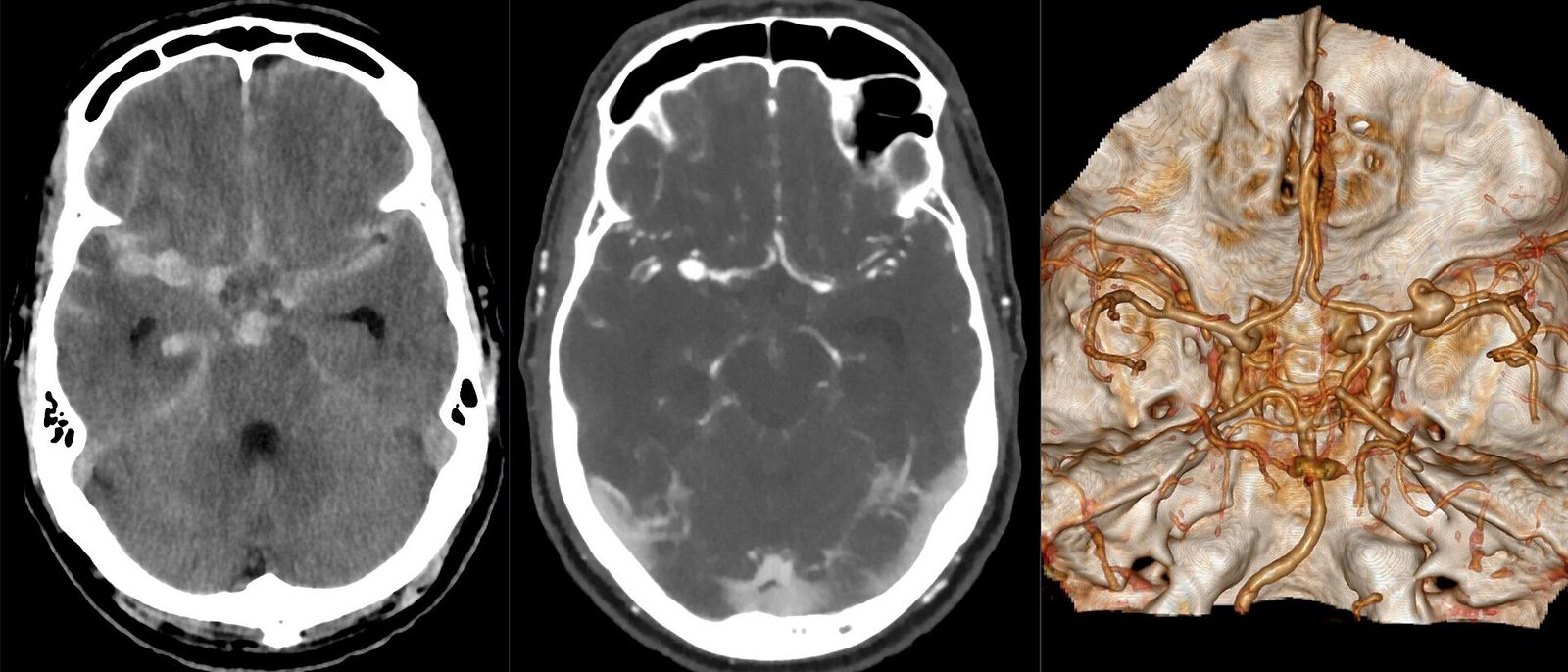
6. Aneurysmal subarachnoid haemorrhage
- Diagnose subarachnoid haemorrhage, including when the CT scan is normal
- Choose between endovascular coiling and clipping using ISAT and current guidelines
- Prevent and treat delayed cerebral ischaemia
- Manage acute hydrocephalus after subarachnoid haemorrhage
7. Unruptured intracranial aneurysms
- Estimate the rupture risk of an unruptured aneurysm with a validated score
- Weigh treatment against observation using a consensus treatment score and European guidance
- Plan imaging follow-up for an aneurysm that is not treated
- Counsel a patient on the risks of treatment and of observation
8. Spontaneous intracerebral haemorrhage
- Identify patients with intracerebral haemorrhage who may benefit from surgery
- Explain the evidence for minimally invasive evacuation from the ENRICH trial
- Reverse anticoagulation rapidly in intracerebral haemorrhage
- Investigate for an underlying vascular cause of the haemorrhage
9. Space-occupying infarction: hemicraniectomy and posterior fossa decompression
- Select patients with malignant middle cerebral artery infarction for hemicraniectomy
- Counsel families on survival and disability after hemicraniectomy, including in older patients
- Recognise cerebellar infarction that needs decompression or ventricular drainage
- Time decompressive surgery against clinical and imaging signs of swelling
10. Arteriovenous malformations, cavernomas and dural fistulae
- Grade a brain arteriovenous malformation and estimate the surgical risk
- Interpret the ARUBA trial and its limits for an unruptured malformation
- Choose between surgery, radiosurgery, embolisation and observation
- Advise a patient with a cavernous malformation on bleeding risk and treatment
Module 3 · Sessions 11 to 15Neuro-oncology
11. Brain tumour pathways, molecular classification and the multidisciplinary team
- Plan investigation of a suspected brain tumour in line with NICE NG99
- Interpret an integrated molecular diagnosis under the 2021 WHO classification
- Prescribe steroids and antiseizure drugs appropriately around surgery
- Present a brain tumour case to the multidisciplinary team with the information needed for a decision
12. Glioma surgery
- Plan maximal safe resection using current extent of resection guidance
- Select patients for awake craniotomy and intraoperative mapping
- Explain adjuvant options, including targeted therapy after the INDIGO trial
- Decide when to offer further surgery for recurrent glioma
13. Meningioma and brain metastases
- Decide between observation, surgery and radiotherapy for a meningioma
- Grade the extent of meningioma resection and plan follow-up
- Select patients with brain metastases for surgery or radiosurgery
- Coordinate brain metastasis care with oncology using current guidelines
14. Pituitary and skull base surgery
- Assess a pituitary adenoma with endocrine and visual field testing
- Decide when pituitary apoplexy needs urgent surgery
- Manage sodium and cortisol problems after pituitary surgery
- Choose between observation, radiosurgery and surgery for vestibular schwannoma
15. Spinal tumours and metastatic spinal cord compression
- Recognise metastatic spinal cord compression and arrange MRI within the recommended time
- Assess spinal stability using the Spinal Instability Neoplastic Score
- Choose between surgery and radiotherapy for metastatic cord compression
- Plan surgery for an intradural spinal tumour
Module 4 · Sessions 16 to 20Cerebrospinal fluid disorders, functional and paediatric neurosurgery
16. Hydrocephalus and shunts
- Choose between a shunt and endoscopic third ventriculostomy using a validated success score
- Recognise shunt malfunction and decide on investigation and revision
- Select a shunt catheter using BASICS trial evidence
- Select patients with normal pressure hydrocephalus for shunting
17. Idiopathic intracranial hypertension and spontaneous intracranial hypotension
- Diagnose idiopathic intracranial hypertension and act to protect vision
- Choose between CSF diversion, venous sinus stenting and optic nerve sheath fenestration
- Recognise spontaneous intracranial hypotension and plan its investigation
- Plan treatment of a spinal CSF leak with the multidisciplinary team
18. Functional neurosurgery: movement disorders and trigeminal neuralgia
- Identify patients with Parkinson's disease who should be referred for deep brain stimulation
- Compare deep brain stimulation with lesioning procedures for tremor
- Choose between microvascular decompression, percutaneous procedures and radiosurgery for trigeminal neuralgia
- Counsel patients on the risks and expected benefits of functional surgery
19. Epilepsy surgery and neuromodulation
- Define drug-resistant epilepsy and refer for surgical assessment in line with NICE NG217
- Outline the presurgical evaluation for epilepsy surgery
- Compare resection, ablation and neuromodulation for drug-resistant epilepsy
- Explain the outcomes and risks of epilepsy surgery to a patient
20. Paediatric neurosurgery for the general neurosurgeon
- Recognise raised intracranial pressure in an infant or child
- Identify craniosynostosis and refer at the right time
- Recognise injuries that suggest abusive head trauma and act on safeguarding concerns
- Stabilise and transfer a child to a paediatric neurosurgical centre
Module 5 · Sessions 21 to 25Spinal emergencies, infection and professional practice
21. Cauda equina syndrome and degenerative cervical myelopathy: the neurosurgeon's decisions
- Recognise suspected cauda equina syndrome and arrange emergency MRI under the national pathway
- Time decompression for cauda equina syndrome by its clinical stage
- Grade degenerative cervical myelopathy and decide who needs surgery
- Advise patients with cord compression but no myelopathy on risk and follow-up
22. Central nervous system infection
- Plan aspiration or excision and antibiotics for a brain abscess
- Diagnose ventriculitis and shunt or drain infection
- Choose antimicrobial therapy and its duration with microbiology
- Recognise subdural empyema and spinal epidural abscess as surgical emergencies
23. Perioperative care and complications in cranial surgery
- Plan antithrombotic management around elective and emergency cranial surgery
- Balance venous thromboembolism prophylaxis against bleeding risk after craniotomy
- Recognise and manage a postoperative intracranial haematoma
- Prevent and treat CSF leak and wound infection after cranial surgery
24. Technology, audit and service quality in neurosurgery
- Use neuronavigation and intraoperative imaging while allowing for brain shift
- Introduce a new procedure or device through local governance
- Use national and local audit data to compare and improve outcomes
- Judge the evidence behind a new neurosurgical technology before adopting it
25. Complex case review and professional practice
- Apply the course to complex neurosurgical cases in a panel discussion
- Hold a consent conversation that covers material risks and alternatives, including not operating
- Present a complication at a morbidity and mortality meeting to drive learning
- Plan your own development towards a subspecialty practice
What the diploma includes
- 25 live sessions on Zoom, one evening a week, with recordings for the weeks you miss.
- Practising specialists teaching live, so you can put your questions to them.
- Weekly MCQs and a final written assessment.
- A digital certificate carrying your final classification.
Lead or teach the Neurosurgery Diploma
We are looking for a course director and faculty from the specialty. Sessions are one hour in the UK evening, live on Zoom, and paid.