Orthopaedic Diploma
Adult Trauma Diploma
CME-accreditedAMA PRA Category 1 Credit™via JBJS
Structured adult orthopaedic trauma training.
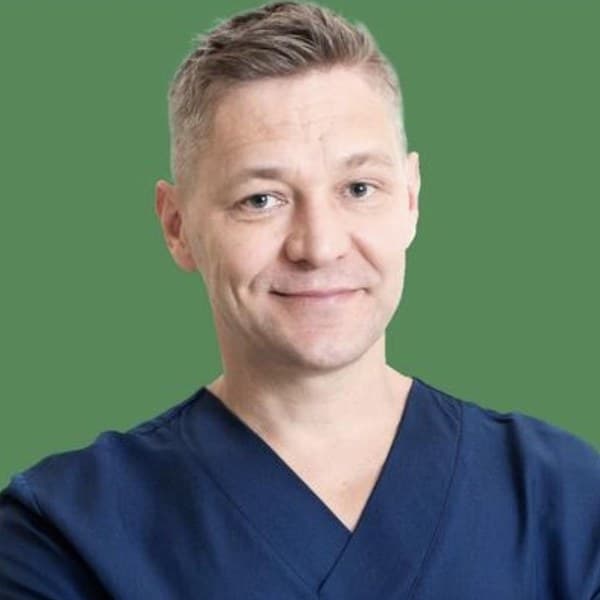
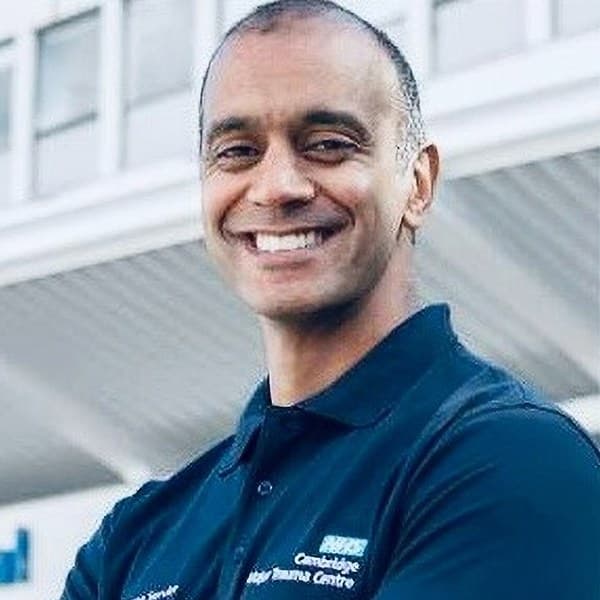

Taught live by practising specialists you can question.
Omar Sabri, Jowan Penn-Barwell and 14 more Meet the faculty
Academic partner


18 sessions across 5 modules, delivered over approximately 18 weeks (longer due to breaks).
Orthopaedic Diplomas in partnership with JBJS and Miller Review Course Oxford

Overview
What the diploma covers.
A structured online programme covering the adult orthopaedic trauma curriculum from polytrauma resuscitation through definitive fixation, complications and special populations. The curriculum runs from principles and pelvic trauma through the upper and lower limbs, with a dedicated wrist session and a final module on non-union, periprosthetic fracture, infection and geriatric trauma. Carpal injuries are covered separately in the Hand Diploma.
Modules
The diploma runs as 18 weekly sessions across 5 modules.
Show the 5 modules and 18 sessions
- 01Principles and Polytrauma (4 sessions)
Damage control orthopaedics and the physiology of injury; open fractures and the orthoplastic approach; compartment syndrome, vascular injury and the mangled extremity; fracture biology, healing and the principles of fixation.
- 02Pelvis and Acetabulum (2 sessions)
Pelvic ring injuries from acute resuscitation through definitive percutaneous and open fixation; acetabular fractures from Letournel classification through surgical approaches, fixation and acute total hip arthroplasty in the elderly.
- 03Upper Limb Trauma (3 sessions)
Clavicle, scapula, proximal humerus and humeral shaft; distal humerus, elbow and forearm; a dedicated session on distal radius and wrist injuries. Carpal injuries are covered in the Hand Diploma.
- 04Lower Limb Trauma (5 sessions)
Hip fractures (intracapsular and extracapsular); femoral shaft and ipsilateral neck-shaft fractures; distal femur and knee periarticular trauma; tibial plateau, shaft and pilon fractures; ankle and foot trauma including Lisfranc.
- 05Complications and Special Populations (4 sessions)
Non-union and malunion reconstruction; periprosthetic fractures; fracture-related infection; geriatric trauma, frailty and fragility fractures (including sacral insufficiency and fragility pelvic ring injuries).
Learning outcomes
- Apply ATLS principles and damage control orthopaedics to the polytrauma patient.
- Classify and manage fractures across all anatomical regions using current evidence-based algorithms.
- Recognise and manage complications including non-union, fracture-related infection and periprosthetic fracture.
- Apply principles of trauma care to fragility and geriatric injury contexts.
- Prepare for fellowship exams with structured, case-based teaching.
Faculty
Meet your faculty.
Practising consultants who teach this diploma live. Each takes questions from the group in their session.

Enrolment is open.
Shoulder and Elbow, Orthopaedic Oncology, Paediatric Trauma and Family Medicine are enrolling now. Places are limited and filled on a first-come basis. For all other diplomas, register interest to be notified when applications open.